


Close Menu
Stratnews GlobalStratnews Global
    Facebook X (Twitter) Instagram
    Trending
    • India’s Gaganyaan Enters the Big League of Human Spaceflight Systems
    • Italian Probe Finds False Alarms Behind Suspected Russian Drone Flights
    • Theranos Reporter Leads Copyright Suit Against xAI, OpenAI, and Others
    • Larry Ellison Personally Guarantees Paramount’s $40.4 Billion Warner Bros Bid
    • Nvidia Eyes Mid-February Launch for H200 Chip Shipments to China
    • China’s Long March 12A Booster Recovery Fails in Reusable Rocket Test
    • U.S. Adds DJI and Autel to National Security Risk List, Tightens Drone Restrictions
    • Kuaishou Shares Drop 6% After Cyberattack Hits Livestreaming Services
    Stratnews GlobalStratnews Global
    Write for Us
    Wednesday, December 24
    • Space
    • Science
    • AI and Robotics
    • Industry News
    Stratnews GlobalStratnews Global
    Home » NASA Prioritises Power for Voyager 2 with Instrument Shutdown

    NASA Prioritises Power for Voyager 2 with Instrument Shutdown

    Kanika SharmaBy Kanika SharmaOctober 3, 2024 Space Missions No Comments3 Mins Read
    NASA

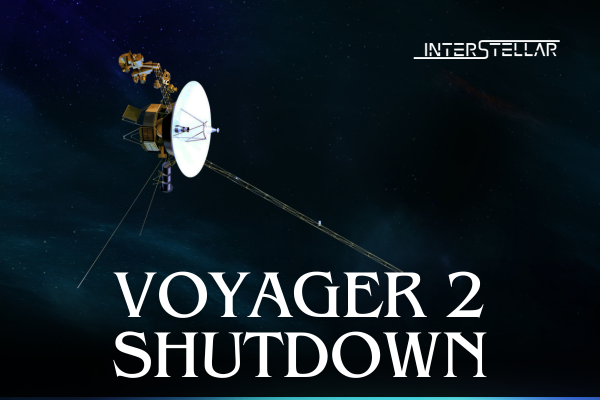
    NASA Shuts Down Voyager 2’s Plasma Science Instrument to Save Power

    NASA engineers have turned off one of Voyager 2’s remaining science instruments as the spacecraft, launched in 1977, continues its exploration of interstellar space. Due to limited power supplies, NASA made the decision to shut down the plasma science instrument on September 26, 2023, after running it for 46 years. This step was necessary to ensure the probe can continue operating at least one science instrument into the 2030s.

    Voyager 2: A Long Journey Through Space

    Voyager 2 left Earth on August 20, 1977, and exited the solar system on November 5, 2018. Now, the spacecraft is 12.8 billion miles (20.5 billion kilometres) from Earth. It is one of only two active probes in interstellar space, along with its twin, Voyager 1. Currently, Voyager 2 is using four science instruments to study space beyond the sun’s heliosphere, a region where the solar wind’s influence ends.

    However, as the spacecraft’s power supply, provided by decaying plutonium, depletes at about 4 watts per year, engineers must carefully choose which instruments to keep operational. Out of the original ten instruments, six have already been turned off. NASA hopes to keep at least one of the remaining instruments active well into the 2030s.

    Importance of the Plasma Science Instrument

    The plasma science instrument on Voyager 2 played a key role in understanding interstellar space. It consisted of four “cups” that measured the flow of plasma, a fluid of charged particles. Three of these cups faced the sun, tracking solar wind particles while within the heliosphere. The fourth cup pointed in the opposite direction to monitor plasma in planetary magnetic fields and interstellar space.

    In 2018, this instrument detected a sudden drop in solar particles, confirming Voyager 2 had crossed the boundary into interstellar space. Since then, its data has been limited due to the spacecraft’s orientation, providing useful measurements only every three months. Because of these constraints, NASA determined that turning off the plasma science instrument would have a minimal impact on scientific returns, making it a strategic choice to save power.

    Continuing the Mission Despite Limitations

    NASA’s Jet Propulsion Laboratory (JPL), which manages the Voyager missions, confirmed that the shutdown command was executed without any issues. Voyager 2 remains stable and continues to transmit data from its remaining instruments.

    Both Voyager probes have undergone multiple instrument shutdowns over the decades to conserve power. During the 1980s, several instruments were deactivated after the spacecraft completed their primary mission of studying the outer planets. In recent years, both probes have also turned off non-essential systems to extend their operational lifespans.

    Engineers are now closely monitoring Voyager 2’s power levels. They will decide in the coming years which instrument to turn off next, ensuring that the probe continues to send back data from this final frontier for as long as possible.

    Author

    • Kanika Sharma
      Kanika Sharma

      View all posts
    Featured
    Share. Facebook Twitter Pinterest LinkedIn Tumblr Email Reddit Telegram WhatsApp
    Kanika Sharma
    Kanika Sharma

      Keep Reading

      India’s Gaganyaan Enters the Big League of Human Spaceflight Systems

      Italian Probe Finds False Alarms Behind Suspected Russian Drone Flights

      Theranos Reporter Leads Copyright Suit Against xAI, OpenAI, and Others

      Larry Ellison Personally Guarantees Paramount’s $40.4 Billion Warner Bros Bid

      Nvidia Eyes Mid-February Launch for H200 Chip Shipments to China

      China’s Long March 12A Booster Recovery Fails in Reusable Rocket Test

      Add A Comment
      Leave A Reply Cancel Reply

      Anti Drone System (CUAS)
      Latest Posts

      India’s Gaganyaan Enters the Big League of Human Spaceflight Systems

      December 23, 2025

      Italian Probe Finds False Alarms Behind Suspected Russian Drone Flights

      December 23, 2025

      Theranos Reporter Leads Copyright Suit Against xAI, OpenAI, and Others

      December 23, 2025

      Larry Ellison Personally Guarantees Paramount’s $40.4 Billion Warner Bros Bid

      December 23, 2025

      Nvidia Eyes Mid-February Launch for H200 Chip Shipments to China

      December 23, 2025

      China’s Long March 12A Booster Recovery Fails in Reusable Rocket Test

      December 23, 2025

      U.S. Adds DJI and Autel to National Security Risk List, Tightens Drone Restrictions

      December 23, 2025

      Kuaishou Shares Drop 6% After Cyberattack Hits Livestreaming Services

      December 23, 2025

      AI-Generated Documents Used in Cyberattack on Russian Defence Firms

      December 22, 2025

      Nexperia’s China Arm Secures Local Wafer Supply Amid Rift with Dutch Parent

      December 22, 2025

      Subscribe to News

      Get the latest sports news from NewsSite about world, sports and politics.

      • Astronomical Events
      • Space Missions
      • Industry News
      • Science
      StratNewsGlobal Tech
      Facebook X (Twitter) Instagram LinkedIn YouTube
      © 2025 StratNews Global, A unit of BharatShakti Communications LLP
      • About Us
      • Contributors
      • Copyright
      • Contact
      • Write for Us

      Type above and press Enter to search. Press Esc to cancel.