

Close Menu
Stratnews GlobalStratnews Global
    Facebook X (Twitter) Instagram
    Trending
    • Atomic Clock Failure On IRNSS-1F Pushes India’s NavIC Navigation Constellation Below Operational Threshold
    • Ukraine Opens Battlefield Data For AI Drone Training
    • Data Centres Become Election Issue In France
    • Apple Slashes App Store Fees In China
    • Google Names London HQ ‘Platform 37’ After AlphaGo Move
    • Pentagon Allows Limited Use Of Anthropic AI
    • Why Venture Capital Is Suddenly Betting on Indian Deep Tech
    • UK Warns Social Media Firms Over Child Safety
    • Support Us
    Stratnews GlobalStratnews Global
    Write for Us
    Sunday, March 15
    • Space
    • Science
    • AI and Robotics
    • Industry News
    • Support Us
    Stratnews GlobalStratnews Global
    Home » Apollo Basin Formation Dated to 4.16 Billion Years Ago in Chang’e-6 Breakthrough

    Apollo Basin Formation Dated to 4.16 Billion Years Ago in Chang’e-6 Breakthrough

    ReshamBy ReshamAugust 22, 2025 Space No Comments3 Mins Read
    Apollo Basin

    Lunar Discovery Pushes Back Date of Moon’s Early Impacts by 100 Million Years

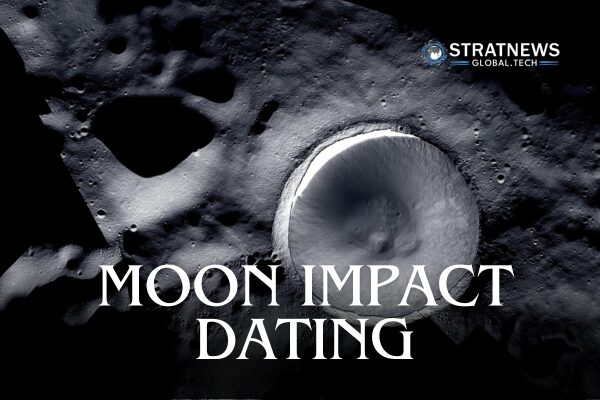
    Chinese and international scientists have determined that the Apollo Basin, a massive impact site on the far side of the moon, was formed around 4.16 billion years ago. This key finding, published in Nature Astronomy, is based on lunar samples collected during China’s Chang’e-6 mission in 2024.

    The discovery offers valuable insight into the Late Heavy Bombardment (LHB), a period marked by intense asteroid strikes across the solar system. The Apollo Basin, situated within the vast South Pole-Aitken Basin, is believed to have formed during the early phase of the LHB. By accurately dating it, researchers aim to better understand how and when the LHB unfolded.

    Chang’e-6 Samples Offer New Evidence

    The Chang’e-6 mission collected over 1.93 kilograms of lunar material after landing in the Apollo Basin last year. A team led by Xu Yigang at the Chinese Academy of Sciences analysed three small clasts, each between 150 and 350 micrometres wide. These clasts, identified as impact-melt fragments, were created during the basin-forming collision and serve as time markers for that event.

    Using geochemical data, remote sensing images, and advanced dating techniques, the researchers pinpointed the formation of the Apollo Basin to roughly 4.16 billion years ago. This pushes back the estimated start of the LHB on the moon by at least 100 million years.

    Gradual Impact Decline Challenges Long-Held Theory

    Previously, scientists debated whether the LHB occurred as a single intense spike in impacts between 3.8 billion and 4 billion years ago, or as a steady decline in activity. The latest findings support a gradual decrease in asteroid strikes, rather than a sudden surge. This refutes the long-held “impact storm” theory and suggests a slower decay in impact events over time.

    Chen Jingyou, a researcher from the same institute, noted the significance of these results: “Prior to our discovery, it was thought the moon experienced a brief, intense period of impacts. Our dating of the Apollo Basin offers fresh clarity.”

    Broader Insights into Lunar Evolution

    Earlier in 2025, a separate study revealed that the larger South Pole-Aitken Basin likely formed around 4.25 billion years ago. That study, also based on Chang’e-6 samples, provided important clues about the moon’s earliest geological history.

    In July, additional findings from the mission were released. These studies focused on areas like volcanic activity, ancient magnetism, water presence, and the geochemical structure of the lunar mantle. Together, the data is helping researchers piece together the broader story of the moon’s—and by extension, Earth’s—early development.

    with inputs from Reuters

    Author

    • Resham
      Resham

      Research Associate at Interstellar.| China Scholar | China Social Media & Foreign Affairs|

      View all posts
    Featured
    Share. Facebook Twitter Pinterest LinkedIn Tumblr Email Reddit Telegram WhatsApp
    Resham
    • X (Twitter)

    Research Associate at Interstellar.| China Scholar | China Social Media & Foreign Affairs|

    Keep Reading

    Atomic Clock Failure On IRNSS-1F Pushes India’s NavIC Navigation Constellation Below Operational Threshold

    Ukraine Opens Battlefield Data For AI Drone Training

    Data Centres Become Election Issue In France

    Apple Slashes App Store Fees In China

    Google Names London HQ ‘Platform 37’ After AlphaGo Move

    Pentagon Allows Limited Use Of Anthropic AI

    Add A Comment
    Leave A Reply Cancel Reply

    Anti Drone System (CUAS)
    Latest Posts

    Atomic Clock Failure On IRNSS-1F Pushes India’s NavIC Navigation Constellation Below Operational Threshold

    March 14, 2026

    Ukraine Opens Battlefield Data For AI Drone Training

    March 13, 2026

    Data Centres Become Election Issue In France

    March 13, 2026

    Apple Slashes App Store Fees In China

    March 13, 2026

    Google Names London HQ ‘Platform 37’ After AlphaGo Move

    March 12, 2026

    Pentagon Allows Limited Use Of Anthropic AI

    March 12, 2026

    Why Venture Capital Is Suddenly Betting on Indian Deep Tech

    March 12, 2026

    UK Warns Social Media Firms Over Child Safety

    March 12, 2026

    Age Check laws gain momentum as nations target teen access

    March 10, 2026

    Space Exercise Device for Astronaut Microgravity Training

    March 10, 2026

    Subscribe to News

    Get the latest sports news from NewsSite about world, sports and politics.

    • Astronomical Events
    • Space Missions
    • Industry News
    • Science
    StratNewsGlobal Tech
    Facebook X (Twitter) Instagram LinkedIn YouTube
    © 2026 StratNews Global, A unit of BharatShakti Communications LLP
    • About Us
    • Contributors
    • Copyright
    • Contact
    • Write for Us

    Type above and press Enter to search. Press Esc to cancel.