

Close Menu
Stratnews GlobalStratnews Global
    Facebook X (Twitter) Instagram
    Trending
    • Atomic Clock Failure On IRNSS-1F Pushes India’s NavIC Navigation Constellation Below Operational Threshold
    • Ukraine Opens Battlefield Data For AI Drone Training
    • Data Centres Become Election Issue In France
    • Apple Slashes App Store Fees In China
    • Google Names London HQ ‘Platform 37’ After AlphaGo Move
    • Pentagon Allows Limited Use Of Anthropic AI
    • Why Venture Capital Is Suddenly Betting on Indian Deep Tech
    • UK Warns Social Media Firms Over Child Safety
    • Support Us
    Stratnews GlobalStratnews Global
    Write for Us
    Sunday, March 15
    • Space
    • Science
    • AI and Robotics
    • Industry News
    • Support Us
    Stratnews GlobalStratnews Global
    Home » China to Launch Unmanned Shenzhou-22 to Stabilise Tiangong Space Station

    China to Launch Unmanned Shenzhou-22 to Stabilise Tiangong Space Station

    ReshamBy ReshamNovember 24, 2025 Space No Comments2 Mins Read
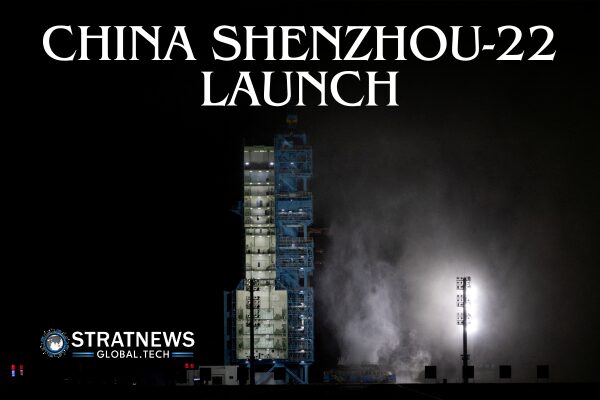
    China Shenzhou-22

    China to Launch Unmanned Shenzhou-22 to Restore Space Station Operations

    China will launch the unmanned Shenzhou-22 spacecraft on November 25, marking a key step toward stabilising operations at its Tiangong space station after an earlier vessel was damaged, state broadcaster CCTV reported on Monday. The move aims to restore normal conditions for China’s manned spaceflight programme, which faced disruption earlier this month.

    Replacing the Damaged Shenzhou-21

    The Shenzhou-22 will travel to Tiangong to replace the Shenzhou-21, which had to return to Earth six months ahead of schedule following damage to another docked vessel, the Shenzhou-20. The early withdrawal left Tiangong and its crew of three astronauts without a standby spacecraft for 10 days — the first such incident since the station became fully operational in late 2022.

    Experts say the new mission will reduce risk for the astronauts currently aboard. The fate of the damaged Shenzhou-20 remains uncertain, though analysts believe Chinese space authorities could undock and de-orbit it safely over the Pacific Ocean to prevent debris hazards.

    Launch from Jiuquan Centre

    As with previous missions, Shenzhou-22 will lift off from the Jiuquan Satellite Launch Centre in northwest China, according to state news agency Xinhua. Unlike its predecessors, the mission will be uncrewed, as Tiangong’s maximum long-term capacity is three astronauts.

    This decision helps ensure the space station remains within operational limits while maintaining a reliable transport and evacuation capability. China’s next manned mission, expected in April next year, is likely to be the Shenzhou-23.

    Managing Space Station Capacity and Safety

    Earlier in November, damage to the Shenzhou-20 forced its crew to remain aboard Tiangong for nine extra days alongside the incoming Shenzhou-21 team, bringing the total number of astronauts to six — the maximum the station can sustain. The Shenzhou-22 mission is therefore viewed as a crucial measure to restore regular rotation and safety protocols aboard Tiangong.

    The latest launch highlights China’s continued progress in maintaining its independent orbital station, which serves as a platform for long-duration scientific research and future deep-space missions.

    with inputs from Reuters

    Author

    • Resham
      Resham

      Research Associate at Interstellar.| China Scholar | China Social Media & Foreign Affairs|

      View all posts
    Featured
    Share. Facebook Twitter Pinterest LinkedIn Tumblr Email Reddit Telegram WhatsApp
    Resham
    • X (Twitter)

    Research Associate at Interstellar.| China Scholar | China Social Media & Foreign Affairs|

    Keep Reading

    Atomic Clock Failure On IRNSS-1F Pushes India’s NavIC Navigation Constellation Below Operational Threshold

    Ukraine Opens Battlefield Data For AI Drone Training

    Data Centres Become Election Issue In France

    Apple Slashes App Store Fees In China

    Google Names London HQ ‘Platform 37’ After AlphaGo Move

    Pentagon Allows Limited Use Of Anthropic AI

    Add A Comment
    Leave A Reply Cancel Reply

    Anti Drone System (CUAS)
    Latest Posts

    Atomic Clock Failure On IRNSS-1F Pushes India’s NavIC Navigation Constellation Below Operational Threshold

    March 14, 2026

    Ukraine Opens Battlefield Data For AI Drone Training

    March 13, 2026

    Data Centres Become Election Issue In France

    March 13, 2026

    Apple Slashes App Store Fees In China

    March 13, 2026

    Google Names London HQ ‘Platform 37’ After AlphaGo Move

    March 12, 2026

    Pentagon Allows Limited Use Of Anthropic AI

    March 12, 2026

    Why Venture Capital Is Suddenly Betting on Indian Deep Tech

    March 12, 2026

    UK Warns Social Media Firms Over Child Safety

    March 12, 2026

    Age Check laws gain momentum as nations target teen access

    March 10, 2026

    Space Exercise Device for Astronaut Microgravity Training

    March 10, 2026

    Subscribe to News

    Get the latest sports news from NewsSite about world, sports and politics.

    • Astronomical Events
    • Space Missions
    • Industry News
    • Science
    StratNewsGlobal Tech
    Facebook X (Twitter) Instagram LinkedIn YouTube
    © 2026 StratNews Global, A unit of BharatShakti Communications LLP
    • About Us
    • Contributors
    • Copyright
    • Contact
    • Write for Us

    Type above and press Enter to search. Press Esc to cancel.