


Close Menu
Stratnews GlobalStratnews Global
    Facebook X (Twitter) Instagram
    Trending
    • Energy Storage Expansion Drives China Solar Strategy
    • Swedish Nuclear Expansion Gains Momentum With Blykalla
    • South Korea Robotics Gains Backing From Jensen Huang
    • Anthropic IPO Prospects Improve Amid US Thaw
    • Shield AI Faces Questions Over V-BAT Safety
    • SpaceX IPO Faces Access Restrictions in China
    • Nano Agriculture Solutions Drive HAS India Expansion
    • Single Window Clearance System Launched by DDA
    • Support Us
    Stratnews GlobalStratnews Global
    Write for Us
    Saturday, June 6
    • Space
    • Science
    • AI and Robotics
    • Industry News
    • Support Us
    Stratnews GlobalStratnews Global
    Home » Thales, Airbus and Leonardo Near Deal on €10 Billion European Satellite Group

    Thales, Airbus and Leonardo Near Deal on €10 Billion European Satellite Group

    Kanika SharmaBy Kanika SharmaSeptember 16, 2025 Space No Comments3 Mins Read
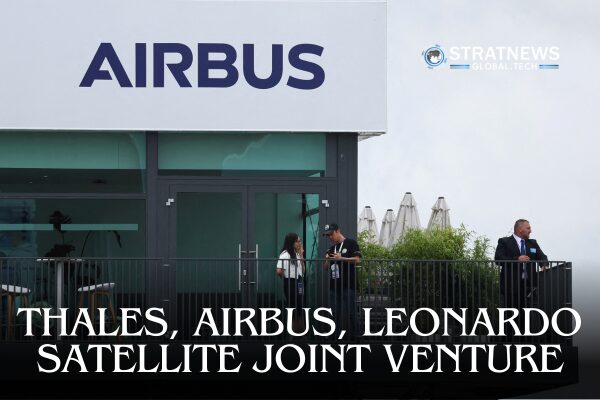
    Thales, Airbus and Leonardo

    Thales, Airbus and Leonardo Move Closer to €10 Billion Satellite Venture

    Leonardo, Thales and Airbus are working to finalise an initial agreement on a €10 billion joint venture to merge their satellite operations. The proposed partnership, known as “Project Bromo”, aims to create a European satellite manufacturing powerhouse. According to sources familiar with the matter, the companies are seeking to counter growing competition from the US and China, especially from players like Elon Musk’s Starlink.

    The new venture would be headquartered in France and could be modelled after MBDA, the European missile manufacturer jointly owned by Airbus, Leonardo and BAE Systems. Sources suggest a memorandum of understanding may be signed before the end of September. However, delays remain possible.

    Renewed Focus After Previous Setbacks

    Negotiations had stalled during the summer due to disagreements over valuation and governance. At one point, discussions nearly collapsed. Despite those setbacks, momentum has returned, and progress has resumed.

    One key challenge is finalising the structure of ownership and management. The companies are still negotiating how the venture will be divided, though it may be split equally among the three. Political backing has been positive so far, but formal approval from governments is still required.

    The joint venture will likely include separate national entities to safeguard sensitive defence-related assets. This approach mirrors MBDA’s structure, which balances cross-border collaboration with national security concerns.

    Strategic Importance in a Shifting Market

    The satellite sector is experiencing rapid change, driven by the rise of low-earth orbit technology and lower-cost solutions. Starlink’s growth has increased pressure on European firms to consolidate and compete more effectively.

    European policymakers have also pushed for stronger sovereign capabilities in response to rising geopolitical tensions and evolving US policies. With all three companies having state shareholders, political considerations remain a major factor in any final agreement.

    Airbus CEO Guillaume Faury confirmed earlier this week that talks are ongoing with governments and stakeholders. “We are on the way,” he said, noting that anti-trust discussions had already begun.

    Thales has confirmed that no final agreement has been reached yet. “We are continuing our work. Any further comment would be premature,” a spokesperson said.

    Future of the Venture Still Taking Shape

    If successful, the deal would combine satellite units with annual revenues totalling between €6 billion and €6.5 billion. Industry benchmarks suggest this supports the joint venture’s estimated €10 billion valuation. The final location is likely to be Toulouse, where Airbus is headquartered, although details remain under discussion.

    Previous efforts to form a similar European satellite entity failed due to regulatory concerns and national rivalries. This time, however, growing market pressure may help overcome past barriers.

    with inputs from Reuters

    Author

    • Kanika Sharma
      Kanika Sharma
      View all posts
    Featured
    Share. Facebook Twitter Pinterest LinkedIn Tumblr Email Reddit Telegram WhatsApp
    Kanika Sharma
    Kanika Sharma

      Keep Reading

      Energy Storage Expansion Drives China Solar Strategy

      Swedish Nuclear Expansion Gains Momentum With Blykalla

      South Korea Robotics Gains Backing From Jensen Huang

      Anthropic IPO Prospects Improve Amid US Thaw

      Shield AI Faces Questions Over V-BAT Safety

      SpaceX IPO Faces Access Restrictions in China

      Add A Comment
      Leave A Reply Cancel Reply

      Anti Drone System (CUAS)
      Latest Posts

      Energy Storage Expansion Drives China Solar Strategy

      June 6, 2026

      Swedish Nuclear Expansion Gains Momentum With Blykalla

      June 6, 2026

      South Korea Robotics Gains Backing From Jensen Huang

      June 6, 2026

      Anthropic IPO Prospects Improve Amid US Thaw

      June 6, 2026

      Shield AI Faces Questions Over V-BAT Safety

      June 6, 2026

      SpaceX IPO Faces Access Restrictions in China

      June 6, 2026

      Nano Agriculture Solutions Drive HAS India Expansion

      June 5, 2026

      Single Window Clearance System Launched by DDA

      June 5, 2026

      MY Bharat Guinness World Record Sets New Global Benchmark

      June 5, 2026

      Thailand Meta Lawsuit Targets Facebook Scam Ads

      June 5, 2026

      Subscribe to News

      Get the latest sports news from NewsSite about world, sports and politics.

      • Astronomical Events
      • Space Missions
      • Industry News
      • Science
      StratNewsGlobal Tech
      Facebook X (Twitter) Instagram LinkedIn YouTube
      © 2026 StratNews Global, A unit of BharatShakti Communications LLP
      • About Us
      • Contributors
      • Copyright
      • Contact
      • Write for Us

      Type above and press Enter to search. Press Esc to cancel.