


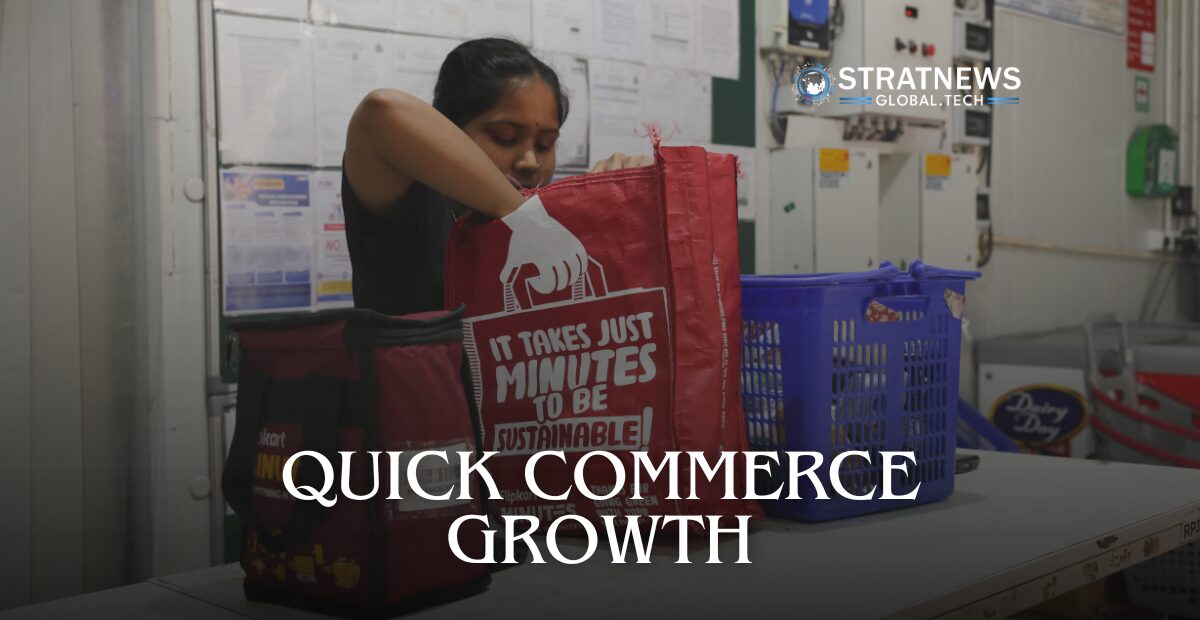
Flipkart Expands Quick Commerce Network Ahead Of India Growth Push
Walmart-owned Flipkart is accelerating the expansion of its quick commerce business in India, aiming to add 500 more neighbourhood warehouses as it seeks to strengthen its position in the country’s rapidly growing $11 billion sector.
The move comes as Flipkart prepares for a future stock market listing in Mumbai, although the company has not announced a timeline for the offering. As competition intensifies in India’s fast-delivery market, Flipkart is focusing heavily on expanding its reach beyond major metropolitan centres.
Rapid Expansion In Fast-Growing Market
Flipkart entered the quick commerce segment later than several rivals, but it has moved aggressively to scale operations. The service enables customers to receive products ranging from groceries and household essentials to electronics within 10 to 30 minutes through a network of local warehouses.
The company announced that its quick commerce arm, Minutes, has now reached 1,000 neighbourhood stores across India. It plans to increase that number to 1,500 within the coming months.
The expansion is designed to help Flipkart compete more effectively with established players in the sector. According to Datum Intelligence, Blinkit operates more than 2,200 stores nationwide, while Instamart has over 1,100 locations.
Smaller Cities Drive Growth Strategy
A key feature of Flipkart’s growth plan is its emphasis on smaller towns and cities. Kunal Gupta, head of Flipkart Minutes, said that more than 70% of the company’s presence across over 130 cities is concentrated in these markets.
The strategy reflects changing consumer behaviour outside India’s largest urban centres. Gupta noted that shoppers in smaller cities often place larger-value orders because they tend to be more price-conscious and purchase multiple items at once.
Flipkart has also expanded aggressively in Bihar, one of India’s least affluent states, as it seeks to tap demand in underserved markets where organised quick commerce services remain relatively limited.
Orders Surge As Consumer Habits Evolve
India’s e-commerce market remains one of the world’s largest growth opportunities, but quick commerce has emerged as one of the fastest-expanding segments. The convenience of ultra-fast deliveries has transformed shopping habits, particularly in urban areas.
Although Flipkart did not disclose exact order volumes, the company said its quick commerce orders have increased fivefold over the past year. Sales from smaller towns and cities reportedly grew 42 times during the same period.
The company is also adapting product offerings to local demand. In Bengaluru, customers can choose from five varieties of avocado, reflecting increasingly diverse consumer preferences. Meanwhile, shoppers in smaller cities continue to prioritise everyday essentials and staple products.
Competition Remains Intense
Despite its rapid growth, Flipkart still trails market leaders in daily order volumes. Datum Intelligence estimates that Blinkit processes around 3 million orders per day, while Instamart handles approximately 1.25 million. Flipkart is estimated to process about 820,000 daily orders.
However, Flipkart recorded the highest average order value among the major players at 700 rupees, suggesting customers are spending more per transaction.
Industry analysts believe gaining market share from established competitors may prove challenging. Datum Intelligence founder Satish Meena noted that Blinkit has built a strong customer base among higher-income households that prioritise convenience and speed.
As India’s quick commerce sector continues to expand, Flipkart’s success will depend on its ability to scale efficiently, deepen its presence in emerging markets and differentiate itself in an increasingly crowded landscape.
With inputs from Reuters