


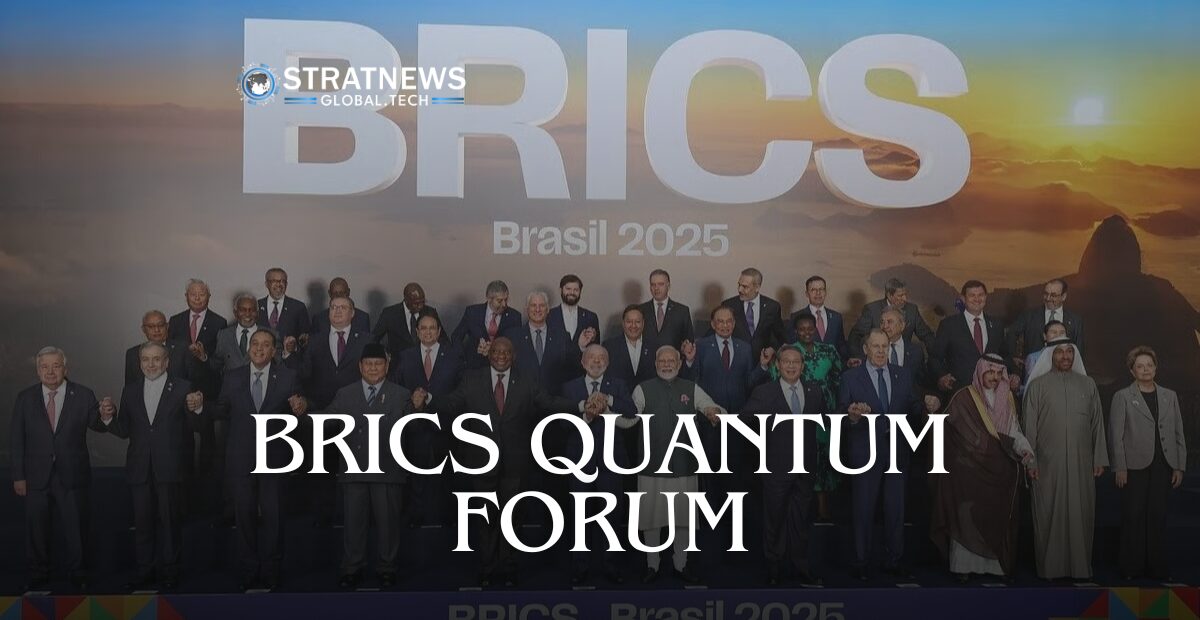
Months before India hosts the BRICS Summit in September, representatives from BRICS nations met in Moscow for the bloc’s first dedicated Quantum Technologies Forum, marking the formal entry of quantum technology into BRICS cooperation efforts.
The forum brought together scientists, policymakers and industry leaders from across the grouping to discuss collaboration in quantum computing, quantum communications and quantum sensing, technologies increasingly viewed as strategic assets in the global technology race.
The meeting concluded with participating delegations adopting a joint statement committing to continued cooperation in the sector.
“Together, we seek to ensure sustainable technological progress across the BRICS countries,” the statement said.
The initiative builds on decisions taken at the 2025 BRICS Summit in Rio de Janeiro, where member states identified quantum science as a key technology area capable of supporting industrial modernisation and long-term economic growth.
For India, which will chair and host the next Summit, the Moscow discussions provide an early indication that advanced technologies could play a larger role in the bloc’s future agenda.
Speaking at the forum, Russian Prime Minister Mikhail Mishustin said cooperation would be essential to overcoming technological barriers in emerging sectors.
“Today, it is critically important to move forward together with our BRICS partners by pooling our research resources. Only through joint efforts can we rapidly overcome technological barriers, create scalable solutions, and ensure their deployment across key industries,” he said.
A central session titled The BRICS Quantum Path: Charting the Course Together explored potential areas of cooperation, including scientific research, education, talent development and industrial applications.
Russian Science and Higher Education Minister Valery Falkov said collaboration between universities and research institutions had already helped accelerate Russia’s domestic programme and could serve as a model for wider BRICS engagement.
Meanwhile, Alexey Likhachev, head of the Russian state nuclear corporation Rosatom, called for quantum technologies to become a permanent part of the BRICS technology agenda, highlighting investments in quantum computing, communications and sensing.
The forum also featured a joint appeal from members of the BRICS Nuclear Energy Platform, who pointed to the growing importance of quantum computing for future energy systems and urged deeper cooperation among member states.
While no specific joint projects were announced, the Moscow meeting established the first dedicated BRICS platform focused on quantum technologies. As India prepares to host the bloc later this year, quantum science appears set to become a more prominent part of BRICS discussions on innovation, industrial development and technological sovereignty.