


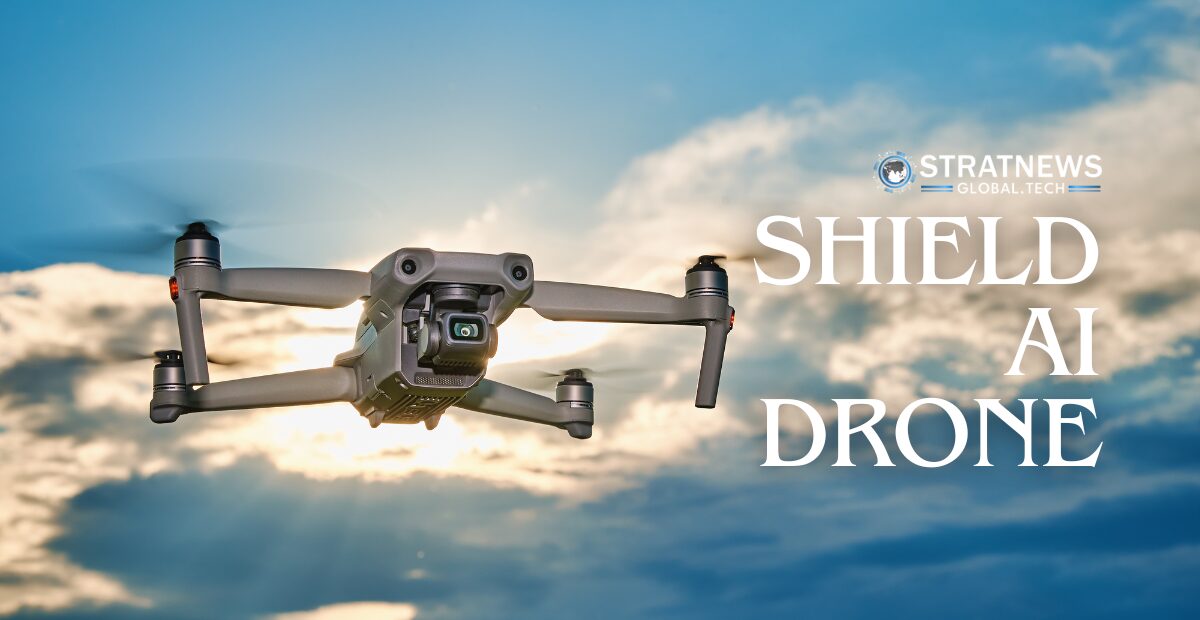
Shield AI Faces Fresh Scrutiny After V-BAT Drone Injury and Safety Allegations
A year after Shield AI said it had improved the safety and reliability of its V-BAT drone following a serious accident involving a U.S. Navy official, the defence technology company is once again facing questions after another severe injury during a training exercise.
A Romanian Navy official lost two fingers and suffered a fracture to a third finger after her hand became caught in a V-BAT propeller during a training exercise on 12 May aboard a vessel off the Texas coast, according to Romania’s Ministry of National Defence. The incident has not previously been reported.
The accident comes amid broader concerns about the performance and safety record of the V-BAT drone, based on interviews with former employees, industry figures and investors, as well as Reuters’ review of a whistleblower complaint, legal filings and company presentations.
Romanian Officer Suffers Serious Injuries
Romania’s defence ministry said the injured officer underwent surgery on 12 May and again on 16 May in New Orleans in an effort to reattach her fingers. Her condition later deteriorated, leading to her transfer to the Walter Reed National Military Medical Center in Maryland.
The ministry said an investigation into the incident remains ongoing and cautioned against drawing conclusions about responsibility or preventability before the inquiry is complete.
Shield AI stated that the injury resulted from a breach of established safety procedures rather than a defect in the drone itself. The company did not provide further details regarding the alleged violation.
Romania’s Naval Forces confirmed that its $30 million contract with Shield AI for V-BAT drones remains in force despite the incident.
Fast-Growing Defence Firm Under Pressure
Founded in 2015 by brothers Ryan and Brandon Tseng, Shield AI has become one of the most prominent defence technology startups in the United States. The company was valued at $12.7 billion during a funding round in March and has positioned itself as a major supplier of autonomous military systems.
The company has benefited from growing global demand for defence technology as conflicts continue in Ukraine and the Middle East and geopolitical tensions increase in the Indo-Pacific region.
Its V-BAT drone, acquired through the purchase of Martin UAV in 2021, is a vertical take-off and landing unmanned aircraft designed for military reconnaissance and operational missions.
Shield AI maintains that the V-BAT remains one of the most proven VTOL platforms in service and says it has accumulated approximately 18,000 flight hours since 2019.
Reports Highlight Drone Crash Concerns
According to people familiar with the programme, more than 50 of roughly 200 upgraded V-BAT drones in Shield AI’s internal fleet have been destroyed in crashes during testing or training over the past 18 months.
Among the reported incidents was a crash during a NATO-related event in Portugal and another accident in Texas that allegedly sparked a grass fire covering more than 40 acres.
The company did not directly address Reuters’ reporting regarding its internal fleet but said customers had experienced only 10 operational mishaps since a major V-BAT upgrade earlier this year.
Shield AI added that operational incidents are not unusual for complex military drone systems and defended the aircraft’s overall performance.
Whistleblower Raises Safety and Transparency Allegations
Former product manager Jacob Miller has filed both a whistleblower complaint and a lawsuit against Shield AI, alleging he was dismissed after raising concerns about flight safety.
According to the complaint, the company concealed technical shortcomings from military customers and altered internal mishap reports to present a more favourable picture of drone performance.
Miller also alleged that during one demonstration for the Greek military, a V-BAT was presented as operating autonomously when it was actually being flown manually.
The complaint claims that revised performance data was later used in support of military sales efforts involving multiple countries and U.S. defence agencies.
Shield AI declined to comment on the specific allegations because of ongoing litigation but said it intends to defend itself vigorously and believes the claims are without merit.
Mid-Air Incident and Employee Concerns
The report also highlights a July test involving a V-BAT’s aircraft-detection capability. During the exercise, a Cessna carrying two Shield AI employees and the young son of one employee reportedly had to take evasive action after the drone failed to identify the aircraft.
Former employees interviewed by Reuters said several workers who raised safety concerns either left the company or were dismissed during the past 18 months.
An external investigation into workplace and safety concerns was reportedly conducted by law firm Littler Mendelson, although its findings have not been made public.
Pentagon Backs New X-BAT Programme
Despite the controversy surrounding the V-BAT, Shield AI continues to expand its ambitions. The company is developing the X-BAT, a larger autonomous aircraft designed to operate alongside fighter jets as a “loyal wingman”.
The Pentagon’s Defense Innovation Unit recently awarded a contract related to the programme. According to company materials reviewed by Reuters, Shield AI sought $500 million in government funding to support development of four X-BAT prototypes by 2029, with total programme costs projected at $1.3 billion.
Company presentations indicate that the X-BAT is expected to use the same flight-control architecture as the V-BAT.
A Pentagon spokesperson acknowledged the risks associated with emerging defence technologies, stating that experimentation and failure remain part of the process of rapidly developing advanced military capabilities.
With inputs from Reuters