


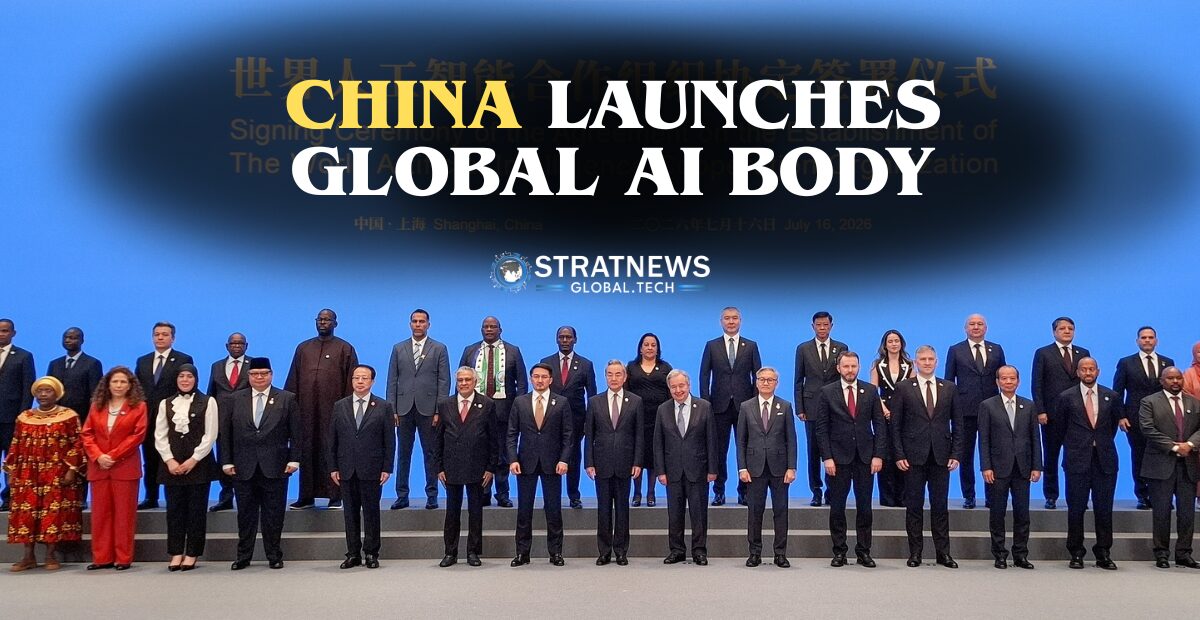
Twenty-nine countries on Thursday signed an agreement to establish the World AI Cooperation Organization (WAICO), a new China-backed intergovernmental body aimed at strengthening international cooperation and shaping global governance in artificial intelligence.
The agreement was signed in Shanghai ahead of the opening of the 2026 World Artificial Intelligence Conference (WAIC), where Chinese President Xi Jinping is expected to present Beijing’s vision for the future of global AI governance.
According to Chinese state news agency Xinhua, the organisation’s headquarters will be based in Shanghai, reinforcing the city’s role as a key hub for China’s artificial intelligence ambitions.
The 29 founding members include Russia, Belarus, Serbia, Cuba, Brazil and Venezuela, alongside 10 African countries and 12 Asian nations, reflecting broad participation from the Global South.
China first proposed the creation of the World AI Cooperation Organization during last year’s WAIC as part of its broader effort to play a leading role in setting international AI standards. While the proposal received attention at the time, no country had formally committed to joining the organisation until Thursday’s signing ceremony.
The launch marks a significant step in Beijing’s efforts to build an alternative platform for AI governance as competition with the United States over advanced technologies intensifies.
The signing also comes just before Xi is expected to outline an ambitious roadmap for China’s role in global AI development and governance during his keynote address at WAIC.
Beijing has increasingly promoted open-source AI models and international collaboration, arguing that artificial intelligence should remain accessible to developing countries rather than being dominated by a handful of major technology companies or advanced economies.
The establishment of WAICO is expected to become one of the most significant announcements at this year’s AI conference, highlighting China’s growing ambition to influence the global rules governing one of the world’s most transformative technologies.

