


Close Menu
Stratnews GlobalStratnews Global
    Facebook X (Twitter) Instagram
    Trending
    • Google And Sea Partner To Develop AI Tools For E Commerce And Gaming
    • Microsoft Says ICE Not Using Its Technology For Mass Surveillance
    • Telegram Denies Russian Allegation Of Encryption Breach
    • Bill Gates Exit Deepens India AI Impact Summit Crisis
    • India AI Summit Robot Controversy Triggers Political Backlash
    • Instagram Youth Mental Health Trial Puts Mark Zuckerberg In Court
    • Telegram Military Messages Exposed To Foreign Intelligence Claims
    • AI Scientific Discovery Era Heralded By Demis Hassabis
    Stratnews GlobalStratnews Global
    Write for Us
    Thursday, February 19
    • Space
    • Science
    • AI and Robotics
    • Industry News
    Stratnews GlobalStratnews Global
    Home » NASA’s Europa Clipper Set to Explore Jupiter’s Icy Moon for Signs of Habitability

    NASA’s Europa Clipper Set to Explore Jupiter’s Icy Moon for Signs of Habitability

    Kanika SharmaBy Kanika SharmaOctober 14, 2024Updated:October 15, 2024 Space No Comments3 Mins Read
    Europa Clipper

    NASA’s Europa Clipper Mission Set to Explore Jupiter’s Icy Moon

    NASA is preparing to launch a spacecraft to Jupiter’s moon Europa, considered one of the most promising locations for finding life beyond Earth. Europa, encased in ice, is thought to contain a vast underground ocean, which makes it a prime target for studying habitability.
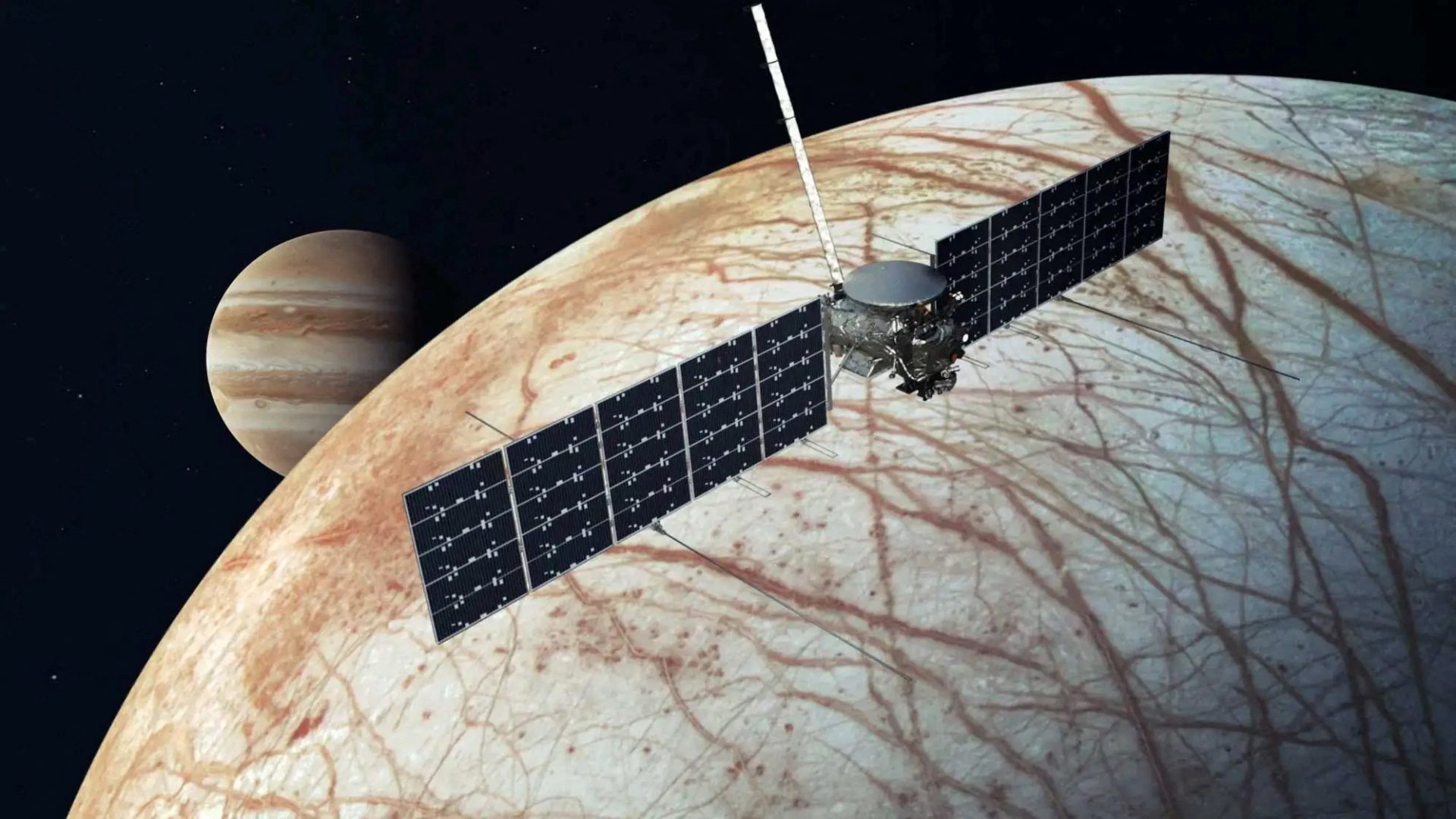
    Europa Clipper
    An artist’s concept shows a NASA’s Europa Clipper spacecraft flying past Jupiter’s moon Europa in this undated illustration released by NASA. NASA/JPL-Caltech/Handout via REUTERS

    Europa Clipper: A Groundbreaking Mission

    The Europa Clipper spacecraft, powered by solar energy, will be launched aboard a SpaceX Falcon Heavy rocket from the Kennedy Space Center. The launch is scheduled for Monday at 12:06 p.m. ET, following a delay caused by Hurricane Milton. Once launched, the spacecraft will travel 1.8 billion miles (2.9 billion km) to reach Jupiter, where it will enter orbit around the planet by 2030.

    The spacecraft carries nine scientific instruments aimed at exploring Europa’s icy surface and subsurface ocean. These instruments will help scientists better understand whether the moon’s environment could support life.
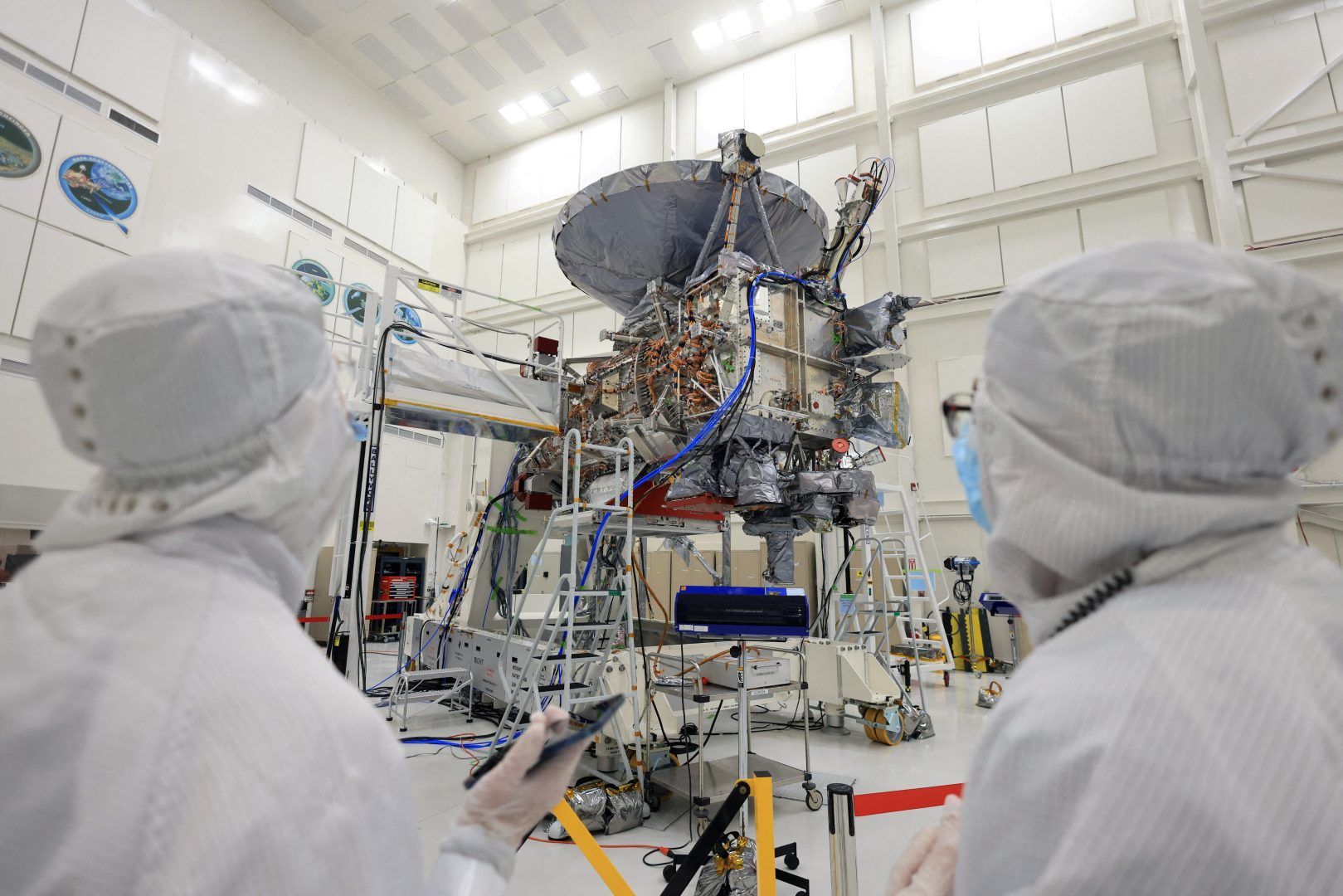
    Europa
    FILE PHOTO: The Europa Clipper spacecraft, which main science goal is to determine whether there are places below the surface of Jupiter’s icy moon, Europa, that could support life, is seen being built and tested at Jet Propulsion Laboratory during a media tour, in Pasadena, California, U.S. April 11, 2024. REUTERS

    Key Objectives of the Mission

    NASA’s Europa Clipper will investigate the moon’s icy shell and the ocean beneath it. While the mission is not designed to detect life, it will explore whether conditions on Europa could support it. Scientists believe Europa contains a salty liquid water ocean beneath its thick ice crust, a key factor for habitability.

    Bonnie Buratti, deputy project scientist for the mission, explained, “There is very strong evidence that the ingredients for life exist on Europa. But we have to go there to find out.”

    The spacecraft will measure the ice layer’s thickness, study Europa’s composition, and map its geology. It will conduct 49 close flybys of Europa during its mission, offering scientists a detailed look at this intriguing moon.
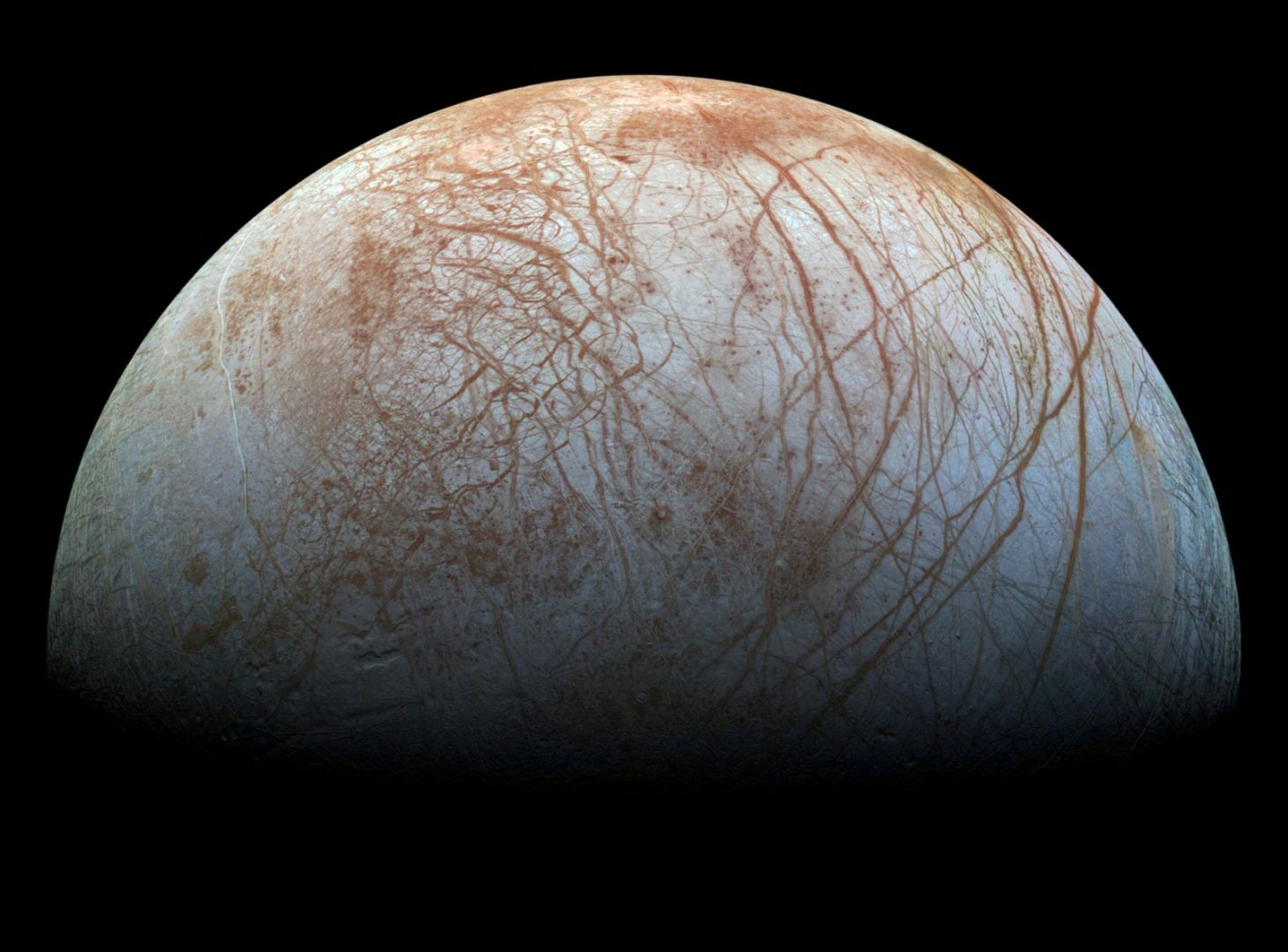
    Europa

    An Ocean World

    Europa, often called an “ocean world,” has an equatorial diameter of about 1,940 miles (3,100 km), making it roughly 90% the size of Earth’s moon. Although smaller than Earth, Europa’s subsurface ocean may contain twice as much water as all of Earth’s oceans combined.

    The moon’s ocean could be warmed by tidal forces from Jupiter’s immense gravitational pull. This process generates heat, which may support life near thermal vents at the bottom of Europa’s ocean. These vents could be similar to those found in Earth’s deep oceans, where primitive life forms thrive.

    Europa Clipper’s MASPEX instrument will study the moon’s chemistry, looking for complex organic molecules that could serve as food for potential primitive organisms.

    NASA hopes that exploring Europa will reveal new insights into the potential for life elsewhere in our solar system. As Buratti said, “There is going to be something there—the unknown—that is going to be so wonderful that we can’t conceive of it right now.”

    Author

    • Kanika Sharma
      Kanika Sharma

      View all posts
    Featured
    Share. Facebook Twitter Pinterest LinkedIn Tumblr Email Reddit Telegram WhatsApp
    Kanika Sharma
    Kanika Sharma

      Keep Reading

      Google And Sea Partner To Develop AI Tools For E Commerce And Gaming

      Microsoft Says ICE Not Using Its Technology For Mass Surveillance

      Telegram Denies Russian Allegation Of Encryption Breach

      Bill Gates Exit Deepens India AI Impact Summit Crisis

      India AI Summit Robot Controversy Triggers Political Backlash

      Instagram Youth Mental Health Trial Puts Mark Zuckerberg In Court

      Add A Comment
      Leave A Reply Cancel Reply

      Anti Drone System (CUAS)
      Latest Posts

      Google And Sea Partner To Develop AI Tools For E Commerce And Gaming

      February 19, 2026

      Microsoft Says ICE Not Using Its Technology For Mass Surveillance

      February 19, 2026

      Telegram Denies Russian Allegation Of Encryption Breach

      February 19, 2026

      Bill Gates Exit Deepens India AI Impact Summit Crisis

      February 19, 2026

      India AI Summit Robot Controversy Triggers Political Backlash

      February 18, 2026

      Instagram Youth Mental Health Trial Puts Mark Zuckerberg In Court

      February 18, 2026

      Telegram Military Messages Exposed To Foreign Intelligence Claims

      February 18, 2026

      AI Scientific Discovery Era Heralded By Demis Hassabis

      February 18, 2026

      China Nuclear Test Allegation Raises Fresh Arms Control Concerns

      February 18, 2026

      YouTube Recommendation System Outage Disrupts Global Access

      February 18, 2026

      Subscribe to News

      Get the latest sports news from NewsSite about world, sports and politics.

      • Astronomical Events
      • Space Missions
      • Industry News
      • Science
      StratNewsGlobal Tech
      Facebook X (Twitter) Instagram LinkedIn YouTube
      © 2026 StratNews Global, A unit of BharatShakti Communications LLP
      • About Us
      • Contributors
      • Copyright
      • Contact
      • Write for Us

      Type above and press Enter to search. Press Esc to cancel.