


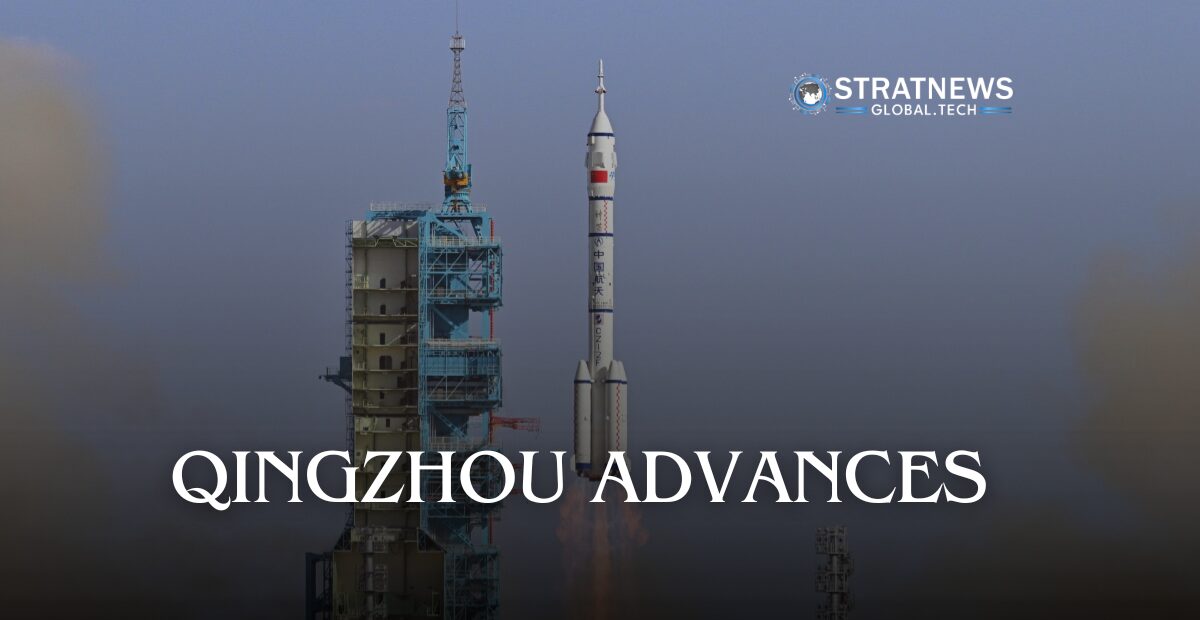
China Releases Second Batch of Qingzhou Scientific Achievements
China has unveiled the second batch of scientific achievements from the Qingzhou cargo spacecraft test vehicle, highlighting progress in several key areas of space technology. The latest results focus on precision measurement in space, reducing the cost and improving the efficiency of space missions, developing technologies for a future space hospital, and advancing space-based biological cultivation.
The newly released achievements, announced on Monday, demonstrate the continued testing of technologies that could support the long-term operation of China’s space programme. According to the Innovation Academy for Microsatellites of the Chinese Academy of Sciences, which developed the test vehicle, the findings will contribute to the application of new space technologies, improve the safe and efficient operation and maintenance of China’s space station, and strengthen the utilisation of space resources.
Flexible Adhesive Device Shows Promise
One of the most significant achievements involves the successful verification of a flexible adhesive transfer device designed for operations in microgravity. The device demonstrated its ability to capture objects repeatedly while producing minimal impact and avoiding the creation of secondary debris.
The technology combines aerospace-adapted industrial components with a design inspired by spider-like biomimetic adhesion. As a result, it offers a potential new approach for several future space operations.
Researchers believe the successful verification could support technologies for removing space debris, carrying out space rescue missions, and transferring cargo between spacecraft while in orbit. These capabilities could improve the safety and efficiency of future missions.
Space Refrigerator Completes In-Orbit Tests
The test vehicle also verified an upgraded vapour-compression space refrigerator during its mission. Engineers confirmed that the system successfully addressed the challenges of gas-liquid separation and maintaining stable compressor operation in a microgravity environment.
Consequently, the refrigerator provides a more cost-effective solution for cold-chain transportation aboard space stations. It could also support future refrigeration requirements during extraterrestrial missions.
In addition, two other important systems completed their in-orbit verification. These include a diagnostic camera designed for space rescue and maintenance tasks, along with a navigation camera that combines visible-light imaging with laser-ranging capabilities. Both systems are currently operating as expected.
Stable Performance Continues in Orbit
Chang Liang, chief designer of the Qingzhou, said the second batch of achievements had undergone stability testing for approximately one to two months. According to Chang, the technologies have met the team’s expectations throughout the testing period.
Furthermore, the Qingzhou test vehicle continues to operate in good condition in an orbit approximately 600 kilometres above Earth. The spacecraft will remain in orbit to conduct additional long-term verification tests covering a range of technologies.
The Qingzhou was launched into orbit on 30 March. Subsequently, the first batch of scientific achievements from the mission was released on 15 April.
Known as the “Light Ship” in Chinese, the Qingzhou has been designed to be smaller and lighter than the existing Tianzhou, or “Sky Ship”, cargo spacecraft. Its compact design aims to support future cargo transport missions while testing technologies that could enhance China’s broader space capabilities.
With inputs from Reuters

