


Space-Eyes SPAC Merger Values Defence Technology Firm at $638 Million
Defence technology company Space-Eyes has agreed to go public through a merger with special purpose acquisition company McKinley Acquisition Corp in a deal that values the combined business at $638 million, according to four people familiar with the matter.
The transaction highlights growing investor interest in defence technology companies as governments worldwide increase spending on drone detection, autonomous systems and artificial intelligence-powered battlefield intelligence.
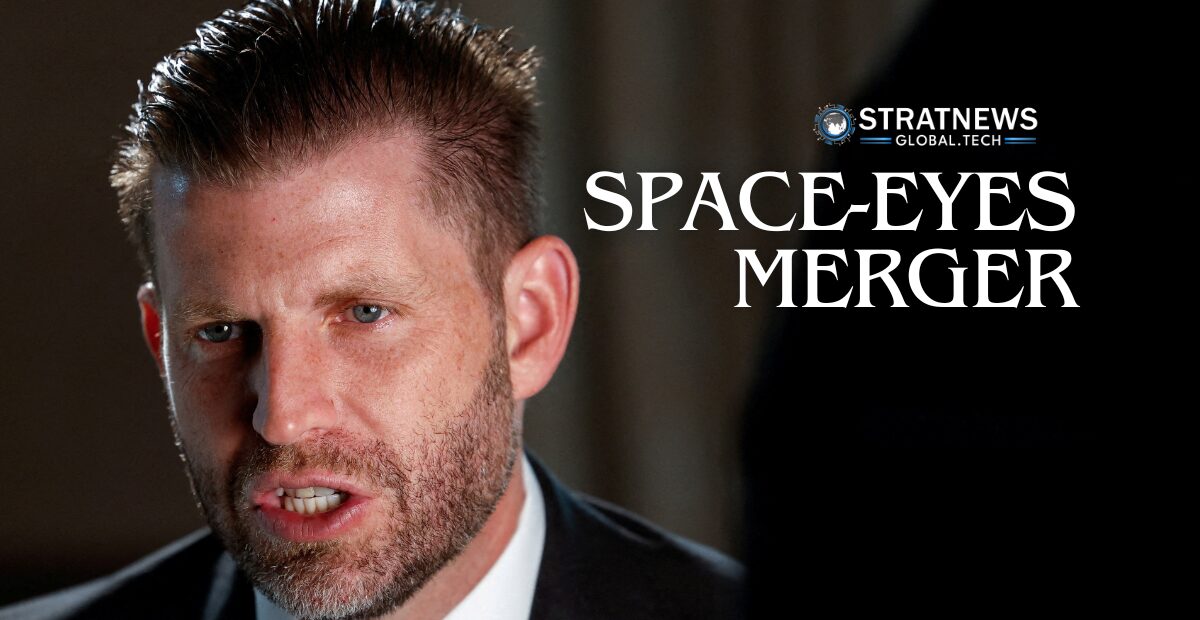
President Donald Trump’s son, Eric Trump, has recently become the third-largest private investor in Space-Eyes, which has operated primarily as a research and development company and currently generates around $1 million in annual revenue, the people said.
Following the transaction, Eric Trump is expected to serve as a strategic adviser to the combined company. The people added that he also helped introduce potential board candidates for the future public business. Representatives for Eric Trump did not respond to a request for comment.
Company Plans Expansion Following Public Listing
Based in Miami, Space-Eyes develops artificial intelligence-powered counter-drone and geospatial intelligence technologies for governments and public agencies.
Although the company has so far focused mainly on technology development, it plans to expand its operations by working with third-party manufacturers. This approach is expected to help it pursue larger government contracts across multiple continents while also serving corporate customers, including cruise operators and data centres, the people said.
The company’s investment case is based primarily on anticipated contract growth rather than its current revenue base.
According to the people familiar with the matter, Space-Eyes is negotiating contracts worth approximately $35 million over five years. By comparison, its existing contract awards are typically valued at between $300,000 and $400,000 annually.
Potential projects include monitoring drug trafficking in the Caribbean, supporting defence operations in the Middle East and preventing drone-borne contraband from entering prisons in the United States, the people said.
Eric Trump to Advise on Security Strategy
As part of his advisory role, Eric Trump is expected to provide guidance on security threats involving drones and other emerging technologies. The people said his advice will draw on his experience with security matters relating to the White House.
“He is an important adviser that connects us to people and opportunities, and he is an adviser that brings the intelligence,” one of the people said.
The proposed merger is expected to generate up to $251.7 million in gross proceeds. That figure includes funds held in McKinley’s trust account as well as a planned private investment in public equity (PIPE) financing, according to the people familiar with the deal.
AI and Counter-Drone Technology Drive Growth Plans
Space-Eyes said its business model is inspired by software and data analytics providers such as Palantir, the people said. Palantir, a major U.S. government contractor, reported an adjusted operating margin of 60% during the first quarter, significantly higher than the single-digit margins typically achieved by traditional defence hardware manufacturers.
The company describes itself as a software and systems business that combines information from satellites, radar, radio-frequency sensors and other sources to detect, track and respond to drone threats while delivering real-time geospatial intelligence.
Its product portfolio includes SeaWatch, a maritime intelligence platform that tracks vessels using satellite and sensor data, and Morpheus, an artificial intelligence-powered counter-drone system designed to detect and mitigate unmanned aerial threats.
Meanwhile, special purpose acquisition companies (SPACs) remain a route to public markets despite losing momentum since the 2020–2022 boom, when many companies that listed through such vehicles later struggled to achieve their projected growth targets.
The merger is expected to close during the fourth quarter of 2026, subject to shareholder and regulatory approvals. Once completed, the combined company is expected to trade on the Nasdaq exchange under the ticker symbol “CUAS”, a reference to counter-unmanned aerial systems.
Earlier this year, Space-Eyes, led by founder and Chief Executive Officer Jatin Bains and Chief Operating Officer Dylan Monroe, announced plans to open an office in Washington to strengthen government partnerships and support federal contracting activities.
With inputs from Reuters