


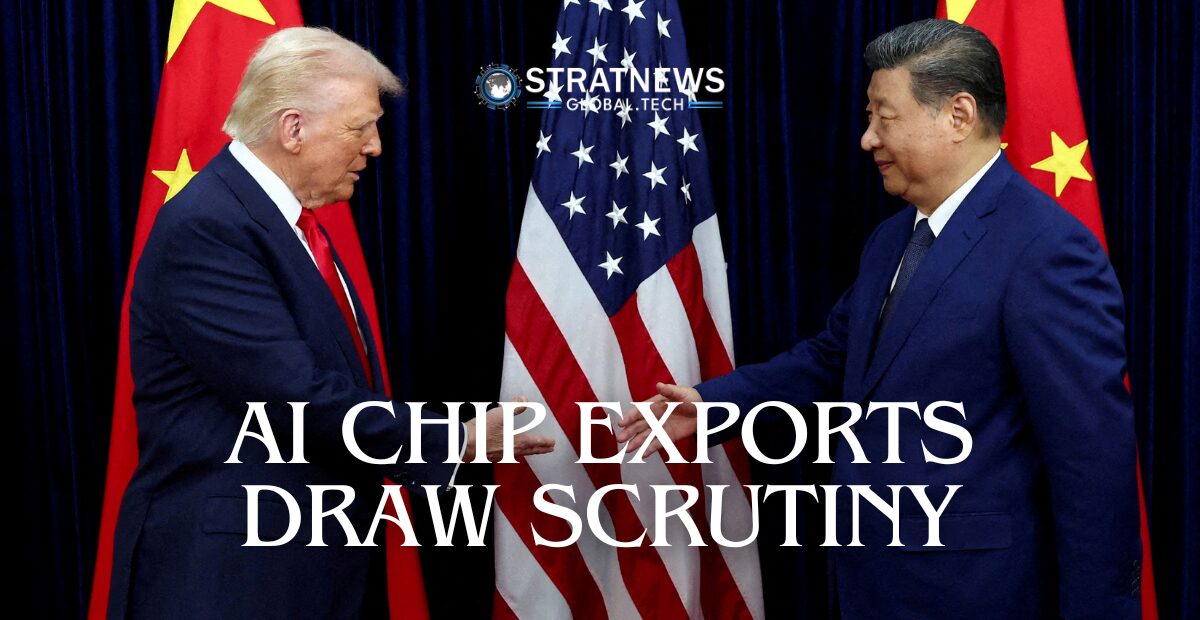
Democratic Senators Raise Concerns Over AI Chip Export Controls
Two Democratic senators have criticised the Trump administration over AI chip exports to overseas subsidiaries of Chinese companies due to a potential regulatory loophole.
Senators Elizabeth Warren and Andy Kim called on U.S. Commerce Secretary Howard Lutnick to testify before Congress, arguing that shortcomings in export control regulations may have created national security risks involving some of the world’s most advanced AI technologies.
Commerce Department Issues New Guidance
The dispute follows a move by the U.S. Department of Commerce, which oversees export controls, to issue new guidance aimed at closing a potential gap in existing regulations.
According to the department, the clarification addresses concerns that advanced AI chips could be sold to subsidiaries of Chinese companies operating outside mainland China. Such entities may have fallen outside the scope of previous restrictions despite maintaining ties to parent organisations headquartered in China.
The guidance applies to cutting-edge semiconductor products, including Nvidia’s Blackwell processors, which are among the most advanced AI chips currently available.
Senators Demand Congressional Testimony
Senator Elizabeth Warren, who serves as the ranking member of the Senate Banking Committee, sharply criticised the administration’s handling of export controls.
Warren argued that the failure to update regulations over the past year and a half may have unintentionally allowed sensitive AI technology to reach companies linked to China.
She warned that such transfers could potentially contribute to China’s military and technological capabilities.
As a result, Warren and Senator Andy Kim are urging Commerce Secretary Howard Lutnick to appear before the Senate Banking Committee to explain how the department managed export enforcement and whether any regulatory shortcomings existed.
The lawmakers contend that Congress needs greater clarity regarding the effectiveness of current export control measures and the safeguards protecting sensitive U.S. technologies.
National Security And Technology Competition
The debate highlights the growing strategic importance of artificial intelligence and semiconductor technologies in the broader competition between the United States and China.
Washington has increasingly tightened restrictions on the export of advanced chips and AI-related technologies to China, citing national security concerns. Policymakers fear that sophisticated processors could support military modernisation, intelligence capabilities and advanced computing programmes.
The latest controversy centres on whether overseas subsidiaries of Chinese companies may have gained access to technology that would otherwise face stricter controls if exported directly to mainland China.
Nvidia Says Business Unaffected
Nvidia, one of the world’s leading AI chip manufacturers, said the new guidance does not affect its operations.
A company spokesperson stated that the clarification simply reinforces Nvidia’s existing sales procedures and customer-screening processes.
According to the company, its current compliance and vetting framework already aligns with the requirements outlined in the Commerce Department’s updated guidance.
The Commerce Department did not respond to requests for comment regarding the senators’ criticism or calls for testimony.
The issue is likely to remain under scrutiny as lawmakers continue to examine how export controls can keep pace with the rapidly evolving AI industry and intensifying geopolitical competition over advanced technology.
With inputs from Reuters

