


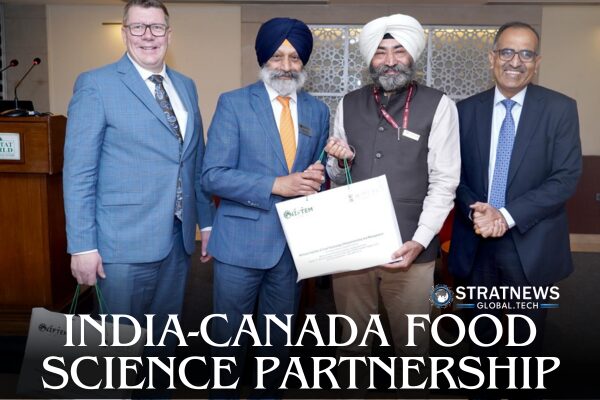
NIFTEM K and University of Saskatchewan sign MoU for Research and Training in Food Technology
The National Institute of Food Technology Entrepreneurship and Management-Kundli has signed a Memorandum of Understanding with the University of Saskatchewan in Canada to strengthen academic and research cooperation in food science and technology.
The agreement aims to promote collaboration between India and Canada in the agri food sector. Officials expect the partnership to support innovation, research, and skill development in food processing and sustainable food systems.
NIFTEM K and University of Saskatchewan formalise partnership
The National Institute of Food Technology Entrepreneurship and Management Kundli operates as an Institute of National Importance under the Ministry of Food Processing Industries. The institute focuses on advancing research, entrepreneurship, and technological development in the food processing sector.
Dr Harinder Singh Oberoi, Director of NIFTEM K, and Dr Baljit Singh, Vice President Research at the University of Saskatchewan, signed the agreement. The signing ceremony took place in the presence of Saskatchewan Premier Scott Moe and senior officials from India’s Ministry of Food Processing Industries.
Their participation highlighted the strategic importance of the collaboration. The partnership also reflects growing cooperation between India and Canada in the agriculture and food technology sectors.
Centre of Excellence in Pulse Protein to support collaboration
The agreement holds added significance because both countries recently announced plans to establish a Centre of Excellence in Pulse Protein. Leaders from India and Canada revealed the initiative during a high level meeting attended by the Prime Ministers of both nations.
NIFTEM K will lead the project from the Indian side. Meanwhile, the University of Saskatchewan will guide the initiative from the Canadian side.
The Centre of Excellence aims to support research and innovation in pulse protein development. In addition, it will encourage technological advancement and industry applications within the growing plant protein sector.
Focus on research, training, and academic exchange
The five year agreement outlines several areas of cooperation between the two institutions. Both partners will work together to develop online teaching and training programmes in food science and technology.
They will also collaborate on subjects such as food systems economics and business development. Furthermore, the agreement promotes short term exchange programmes for faculty members, researchers, and students.
These exchanges aim to encourage knowledge sharing and exposure to international best practices in food processing and innovation.
In addition, both institutions plan to pursue joint research projects and collaborative funding proposals. They will also explore integrated degree programmes in Food Processing Technology.
The partnership will combine the University of Saskatchewan’s strong agrifood research ecosystem with NIFTEM K’s role as a solution provider for the Indian food processing sector.
Strengthening innovation in the agri food sector
The MoU also includes plans for joint seminars, workshops, and industry focused short courses. These activities will encourage collaboration between researchers, industry experts, and students.
Both institutions will identify projects that offer mutual benefits. They will then formalise specific initiatives through additional collaboration agreements to ensure clear implementation and outcomes.
Leaders from both organisations said the partnership would accelerate innovation and strengthen capacity building. They added that technology driven solutions will support sustainable food systems in both countries.
The collaboration is expected to improve food security and strengthen food processing value chains. Moreover, it may promote research led industrial growth across the agri food sector.
The agreement also represents an important step in expanding NIFTEM K’s global engagement. Through international partnerships like this, the institute aims to strengthen India’s leadership in food technology, entrepreneurship, and management.
With inputs from PIB