


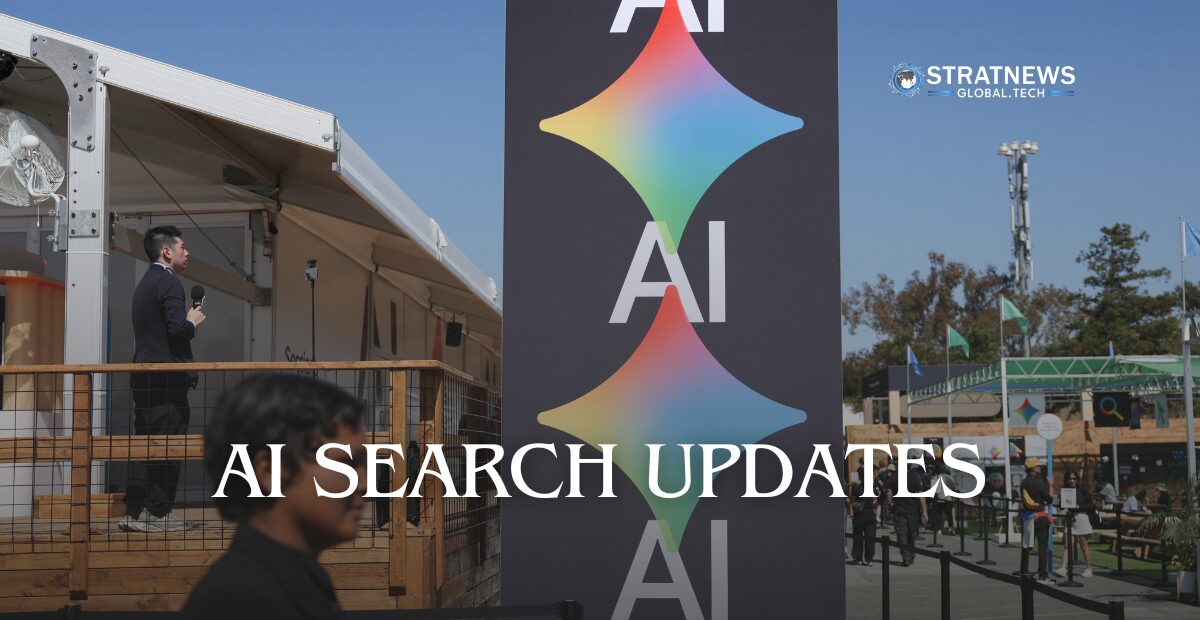
Google Rolls Out Information Agents To Deliver Proactive AI-Powered Search Updates
Google has started rolling out a new generation of AI-powered Search agents that can monitor information on behalf of users and automatically deliver updates. The move marks a significant step in the company’s effort to make Search more proactive rather than reactive.
First introduced at Google I/O 2026, the feature is now becoming available to Google AI Ultra subscribers through AI Mode. Known as Information Agents, the tools are designed to continuously track topics across the internet and notify users when relevant developments emerge.
Rather than requiring users to perform repeated searches, the agents work in the background. According to Google, they can monitor blogs, news websites, social media posts, financial information, shopping data and sports updates to identify changes connected to a user’s request.
How Information Agents Work
Users can activate the feature by entering prompts such as “keep me updated on” or “alert me when” within AI Mode. Once enabled, the agent continuously scans the web and provides a synthesised summary whenever new information becomes available.
As a result, users no longer need to manually revisit the same search topic to check for updates. Instead, the system handles the monitoring process automatically and delivers relevant information when it detects meaningful changes.
Furthermore, Google says the agents use reasoning capabilities to assess what information matters and determine the appropriate time to provide updates. This approach differs from traditional reminder-based systems, which generally check for changes at fixed intervals.
Examples Of Potential Use Cases
Google demonstrated several examples to showcase how the technology could be used in everyday situations.
For instance, a user searching for a rental apartment can specify particular requirements and receive notifications whenever a new listing matching those preferences appears online. Similarly, users interested in product launches can ask the agent to monitor announcements and provide updates when relevant information becomes available.
In another example, the technology can track announcements from athletes and notify users when new sneaker collaborations or signature shoe releases are revealed. Consequently, users can stay informed without repeatedly searching across multiple websites and platforms.
Google’s Broader Search Strategy
The rollout highlights Google’s broader ambition to transform Search into a tool that actively works on behalf of users. Instead of responding only when a query is entered, Search can now monitor topics continuously and surface updates when needed.
Moreover, the company’s approach reflects its growing focus on agentic AI systems capable of performing tasks independently. By delegating monitoring tasks to AI agents, users can reduce the time spent checking multiple sources for the latest information.
For now, Information Agents are available only to subscribers of Google AI Ultra, the company’s premium AI plan. The subscription is priced between $99.99 and $199.99 per month, depending on the selected tier.
Additionally, Google says the feature is available across all AI Mode-supported languages and markets. As the rollout expands, the technology could influence how users interact with search engines by shifting routine monitoring tasks from people to AI-powered systems.
With inputs from Reuters