


China Showcases Medical Innovation at Canton Fair
China’s latest advances in medical science and technology are drawing widespread attention for their growing role in transforming patient care, from diagnosis through surgery to rehabilitation. These developments are being highlighted during the third phase of the 139th China Import and Export Fair, widely known as the Canton Fair, held in Guangzhou, the capital of Guangdong Province in southern China.
The five day segment of the event opened on Friday and presents cutting edge achievements across several sectors, including smart healthcare, functional textiles, and environmentally friendly materials. The exhibition spans 515,000 square metres and features 25,000 booths, offering a comprehensive view of current industrial progress.
Innovation Across the Patient Journey
As visitors move through the exhibition halls, it becomes clear that medical innovation now extends beyond technical specifications. Developers are increasingly focusing on solutions that support patients at every stage of treatment. This shift reflects a broader effort to integrate technology seamlessly into real world healthcare settings.
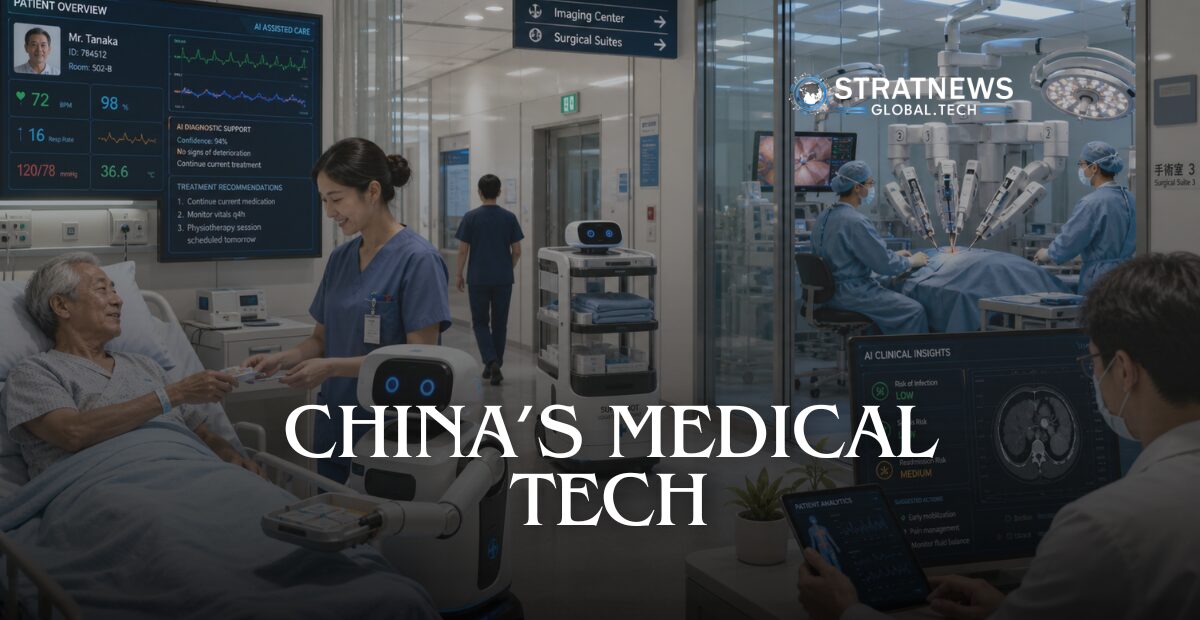
Surgical robots on display demonstrate this evolution. These systems allow doctors to operate using high definition three dimensional visuals and highly flexible instruments designed to mimic wrist movements. At the same time, they require only minimal network connectivity to function effectively.
Exhibitors explain that, in certain situations, a basic mobile connection is sufficient to maintain system operations. As a result, the barriers to deploying advanced surgical tools are significantly reduced, making such technologies more accessible in a wider range of medical environments.
Expanding Global Reach and Practical Applications
Earlier this year, one of these robotic systems enabled a surgeon in Chengdu to perform gastric surgery on a patient located in Brazil. This example highlights the growing potential for cross border medical procedures supported by stable digital connections.
Meanwhile, rehabilitation technologies are attracting considerable interest. Mobile robots capable of navigating stairs and uneven terrain, alongside exoskeletons powered by brain machine interfaces, are designed to help stroke patients regain movement. These innovations focus on practical, everyday functionality and have drawn strong attention from international buyers, particularly from the United States, Europe, and Mexico.
Artificial intelligence also plays an increasingly important role in medical imaging. Systems showcased at the exhibition can analyse X rays and CT scans to identify a range of conditions, including kidney stones and cardiovascular blockages. Developers note that such tools can extend the expertise of highly skilled doctors to smaller community clinics, thereby improving access to quality healthcare.
Since June last year, these systems have been introduced in multiple hospitals. They are capable of detecting issues across 32 organs and generating 92 auxiliary diagnostic models, supporting more accurate screening and clinical decisions.
The Canton Fair, first established in 1957, continues to serve as a key indicator of China’s foreign trade. The current edition follows earlier phases held in mid and late April.
With inputs from Reuters

