


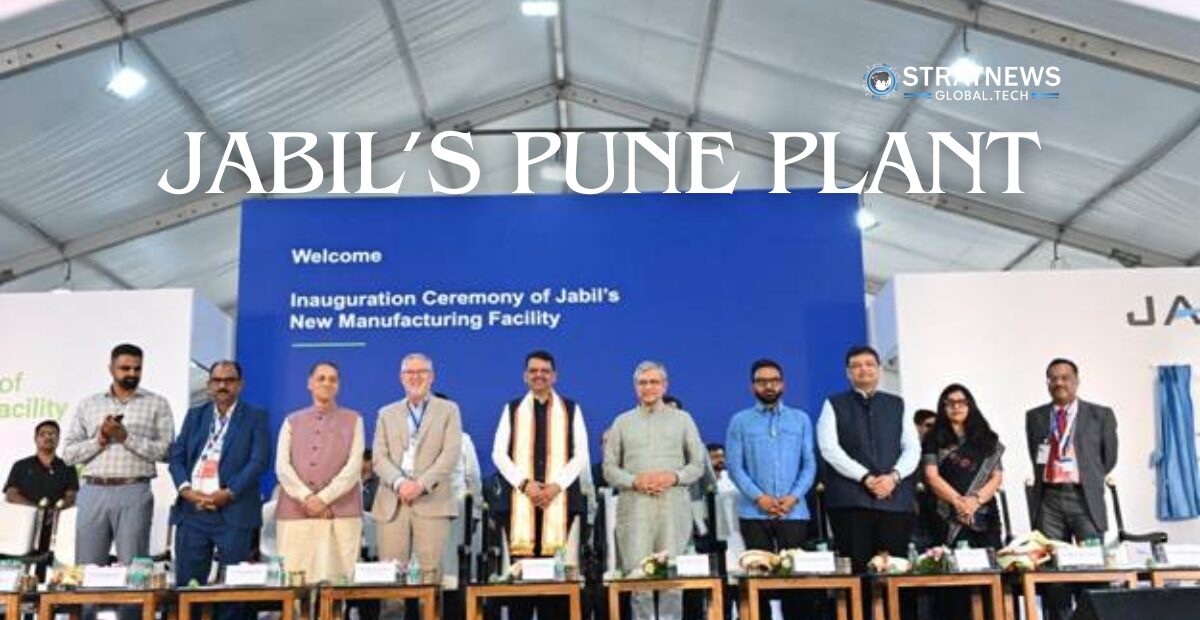
Ashwini Vaishnaw Inaugurates Jabil’s Advanced Manufacturing Facility In Pune
Union Minister for Electronics and Information Technology Ashwini Vaishnaw, alongside Maharashtra Chief Minister Devendra Fadnavis, inaugurated Jabil Inc.’s advanced manufacturing facility at Ranjangaon in Pune on 17 June 2026. The new facility is expected to strengthen India’s electronics manufacturing ecosystem while supporting exports and creating significant employment opportunities.
The inauguration ceremony was attended by several dignitaries, including senior leader Dilip Walse Patil, Dnyaneshwar Katke, Jabil Executive Vice President and Chief Operating Officer Andy Priestley, government officials and members of the Jabil team.
AI Data Centres Drive New Manufacturing Opportunities
Speaking at the event, Vaishnaw said artificial intelligence has emerged as a major force shaping global economic growth. He stressed the importance of building critical AI infrastructure within India and highlighted the role of AI data centres as a key growth engine worldwide.
According to the minister, the government’s Make in India initiative aims to ensure that essential electronic components powering AI data centres are manufactured domestically. The newly inaugurated Jabil facility will produce these critical components in Pune using advanced manufacturing technologies.
He noted that the plant has been designed with substantial operational capacity, enabling it to meet domestic requirements while also serving export markets around the world.
Advanced Facility To Support Global Exports
The new manufacturing unit specialises in advanced electronics production and will focus on several high-technology segments.
Its capabilities include manufacturing AI systems and AI-enabled data centre equipment, 5G technology products, high-end networking equipment, industrial power system electronics and consumer electronics. The facility features a large manufacturing footprint and has been developed to support both Indian demand and global exports.
Backed by policy support and industry collaboration, the project is expected to generate employment for up to 11,000 people. Furthermore, it will promote deeper localisation by integrating domestic suppliers and micro, small and medium enterprises (MSMEs) into global technology supply chains.
Electronics Manufacturing Becomes Key Economic Pillar
Vaishnaw credited Prime Minister Narendra Modi’s vision for transforming electronics manufacturing into a major contributor to India’s economy.
He said that electronics manufacturing and exports were once considered difficult targets, but sustained policy support has helped position India as a trusted global manufacturing destination.
India’s electronics manufacturing sector has now reached a value of ₹13 lakh crore. The minister highlighted the steady rise of electronics exports, noting that the sector progressed from the ninth-largest export category to seventh, fifth and fourth positions before becoming the country’s third-largest export category in 2025.
Focus Shifts To Quality And Supply Chain Localisation
Looking ahead, the minister said the next objective is to elevate electronics to become India’s second-largest export category. Achieving this goal will require coordinated efforts from the central government, state governments, industry stakeholders, investors and the country’s youth.
He emphasised the need to focus on process quality, workforce development and advanced manufacturing capabilities. The government, he said, will continue investing in talent development, skill creation, training programmes and specialised ecosystems required for manufacturing high-precision components.
Vaishnaw also encouraged exploring partnerships with innovators in high-precision mechanical equipment to strengthen localisation efforts and deepen domestic supply chains. Such collaborations, he noted, would help integrate Indian manufacturers more effectively into the global technology ecosystem.
The inauguration of Jabil’s Pune facility marks another step in India’s push to expand high-value electronics manufacturing, strengthen export competitiveness and build a resilient technology supply chain capable of supporting emerging sectors such as artificial intelligence and advanced data centre infrastructure.
With inputs from PIB